
Singapore MedTech Contract Manufacturing
In Asia, Singapore stands out as a reliable base for medical device contract manufacturing. It offers reliable services for OEMs, startups, and medical technology companies. Strict regulation, skilled engineering teams, and modern cleanrooms are hallmarks of the city-state. Together, these enable large-scale production of medical disposables, diagnostics, drug-delivery devices, and precision components.
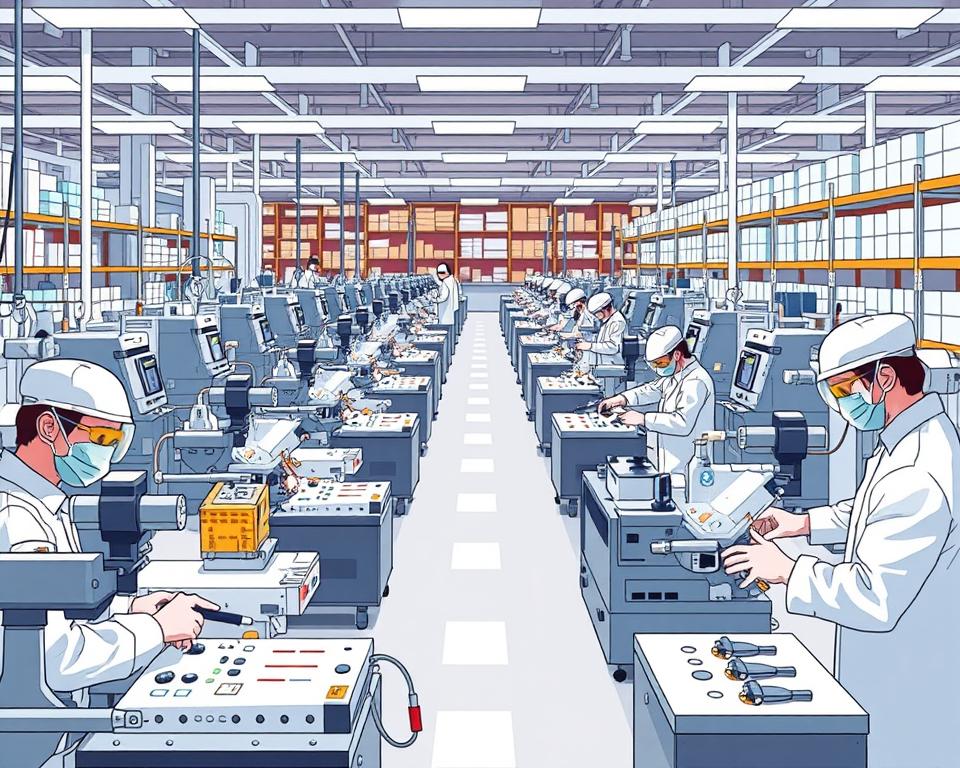
Local partners emphasize quality while maintaining affordability. They invest in https://amt-mat.com/business/medical-device-manufacturer/cleanroom-assembly/ capital equipment, continuous training, and clear work instructions. DFM experts and process engineers support the journey from prototype to full-scale production. Complex parts like catheters are produced within ISO 7/8 cleanrooms.
Many partners in Singapore offer full-service outsourced medical device manufacturing. They provide design support, process development, validation, manufacturing transfer, and project management. End-to-end capability plus scalability makes Singapore appealing for dependable production and rapid market entry.
Key Takeaways
- Singapore is a proven center for medical device contract manufacturing with strong regulatory and quality systems.
- Facilities support complex devices and precision components in ISO 7/8 cleanrooms.
- Manufacturers provide full-service support from design through high-volume production.
- Investments in capital, training, and clear work instructions drive consistent quality and cost control.
- From prototype to mass production, scalable processes enable smooth transitions for OEMs and startups.
Why Singapore is a Strategic Hub
Singapore has developed a strong ecosystem for medical device contract manufacturing, catering to global clients. Strict regulatory oversight merges with skilled industry talent and logistics. This combination supports rapid product development and reliable supply, making it attractive for medical device outsourcing and original equipment manufacturers.
Quality and Regulatory Foundations
Compliance with international standards, including ISO 13485, is required in Singapore. Manufacturers operate in controlled environments—ISO 7 and ISO 8 cleanrooms. The foundation of compliant production lies in clear work instructions, strong document control, and traceability. Detailed records support audits and submissions, enabling access to US, EU, and Asian markets.
Skilled Workforce & Engineering Expertise
Local teams consist of engineers and technicians with expertise in precision metal and ceramic processing. They run processes including metal injection molding (MIM), ceramic injection molding (CIM), and heat-treated steels like 17-4PH. They also sinter tungsten alloy for surgical and endoscopic parts. Such capabilities enable development and high-yield manufacture of complex assemblies and disposables.
Infrastructure, Scalability & Supply Chain Advantages
Scalable lines and tooling enable smooth transitions from prototypes to volume. Advanced tooling—hydraulic core-pull sliders and dedicated MIM/CIM dies—enables cost-effective mass production of complex geometries. Strong ports and supplier networks cut lead times, easing global outsourcing.
contract manufacturing of medical devices
Singapore acts as a hub serving global OEMs and startups for contract manufacturing of medical devices. Support covers initial design right through ongoing production. This approach minimizes development risks and accelerates regulatory approval.
Scope of Contract Manufacturing in Singapore
Services include design support, engineering, and process development in Singapore. Standard offerings include rapid prototyping, cleanroom assembly, validation, and full regulatory files. These steps ensure smooth design-to-production transfer.
Ongoing production is managed with traceability and structured change control. This strategy shortens time to market and lowers compliance risk.
Types of devices commonly produced
Singapore’s manufacturers produce a variety of devices, from disposable to complex items. Products include swabs, disposables, and drug-delivery devices.
ISO 7/8 cleanrooms house the build of complex interventional items. Examples include catheters and components for robotic-assisted surgical systems. Precision metal and ceramic parts are used in endoscope assemblies and life science instruments.
MIM/CIM processes produce mass parts for reusable and single-use assemblies. Materials like 316L stainless steel, tungsten electrodes, and ceramic insulators are common in these components.
OEM & Startup Advantages
Working with a contract manufacturer provides cost-effective solutions for OEMs and startups. MIM often cuts unit cost relative to machining. High-volume production is possible without sacrificing complexity.
Providers support >200,000 parts monthly in proven mass production. Validated cleanroom assembly, process validation know-how, and detailed regulatory documentation are provided. This reduces compliance burdens significantly.
Value-added engineering plus continuous improvement programs raise quality while controlling cost. Singapore https://amt-mat.com/guide-on-high-precision-plastic-injection-molding/ emerges as a practical center for medical device production.
Singapore’s Advanced Manufacturing Capabilities
A broad set of manufacturing capabilities exists in Singapore’s MedTech cluster. It supports prototype needs and large-scale device production alike. Local firms excel at merging materials expertise with precision tooling. The outcome is tight tolerances across devices, reinforcing Singapore as a prime choice.
Precision Manufacturing for Complex Components
Advanced processes like Metal Injection Molding (MIM) and Ceramic Injection Molding (CIM) create detailed geometries. Outputs include internal channels, thin-wall insulators, and intricate electrodes. Hydraulic core-pull slider tooling enables multiple through-holes and 90° internal channels. These features are essential for life-science equipment.
Material selection is carefully chosen to meet clinical demands. Heat-treated Stainless Steel 17-4PH is used for surgical parts due to its strength. Stainless Steel 316L is preferred for implantable and fluid-contact components because of its corrosion resistance. Tungsten alloys serve specialized electrodes, providing ductility and density after sintering.
Industry awards and proven volumes validate these capabilities. Singapore manufacturers have successfully completed multi-million-part programs for robotic-assisted surgical systems. Recognition has been awarded for high-quality components.
Cleanroom Production & Assembly
Catheters, diagnostics, and sterile disposables are built in ISO 7/8 cleanrooms. With documented procedures and trained operators, these environments ensure batch integrity and traceability.
Standardized Work Instructions and continuous skills training help reduce variation in assembly outcomes. With these systems, regulatory expectations for aseptic handling and sterility are met.
Scalable production and high-volume capacity
Full lifecycle support spans proof-of-concept to high-volume runs. Process development with automation keeps scale-up cost-effective and quality intact.
Sustained outputs exceeding 200,000 pieces per month illustrate capacity for disposables. Cumulative deliveries in the millions have solidified Singapore firms as reliable partners for outsourced medical device manufacturing. Ongoing supply is maintained for global markets.
Quality, Validation, and Manufacturing Transfer Processes
Validated production and smooth transfer rely on strong project management, clear instructions, and trained operators. Each stage is mapped, milestones set, and risks managed by the contract manufacturer. This approach protects timelines and ensures product quality.
Project management and transfer planning
A detailed project charter and resource matrix initiate transfer planning. Teams in Singapore employ phased handovers to transition production from an OEM to contract manufacturing services smoothly. This avoids disruptions in supply.
Implementation proceeds in stages—pilot runs, readiness reviews, and https://amt-mat.com/a-deep-dive-into-contract-manufacturing-of-medical-devices operator qualification. Documented procedures and training records ensure consistent output during scale-up.
Process development and validation
Teams emphasize DFM and build processes to hit performance targets. Validation includes equipment IQ/OQ/PQ, capability studies, and in-line QC. When sterilization is required, cleaning and sterilization validations ensure safety standards are met. Continuous improvement with capital investment keeps efficiency and cost-effectiveness high.
Regulatory documentation and traceability
Comprehensive records are vital for local and international regulatory compliance. Traceability logs, batch records, and change control supply a clear audit trail for regulators and PMS. As volume grows, traceability systems link components, operators, and test data. High-quality documentation minimizes submission delays and strengthens outsourcing partnerships.
Choosing the Right Medical Device Contract Manufacturer in Singapore
Choosing the right partner is critical for time to market, cost, and quality. A rich ecosystem of specialists and full-service firms exists in Singapore. They support outsourcing at all stages. Focus on practical factors that matter for regulated device programs.
Technical criteria span methods, materials, and cleanroom classification. Ensure precision processes like MIM and CIM are available. Confirm experience with alloys such as 17-4PH, 316L stainless, and tungsten. Also, verify cleanroom capability at ISO 7 or ISO 8 for assembly and packaging.
Next, consider scalability and capacity. Evaluate the provider’s ability to scale from prototype to high volume. Reliable partners present staged ramp plans and large-scale production examples.
Quality systems and regulatory readiness are vital. Confirm documented instructions, robust training, and complete traceability. These elements reduce transfer and production risk.
Strong project management and transfer experience are critical. Look for structured transfer plans and phased rollouts. A strong partner presents risk mitigation and post-transfer support.
Additional Capabilities
Value-added capabilities include specialized tooling and design-for-manufacture advice. For example, MIM high-volume surgical parts and hydraulic core-pull tools for internal channels. CIM-produced ceramic insulators with tungsten electrodes offer compact solutions for endoscopes.
Industry recognition and proven deliveries are important. Seek suppliers with multi-million part deliveries for robotic-assisted systems. Continuous training and capital investment lead to lower costs and better manufacturability over the product lifecycle.
Commercials and Partnership Approach
Assess cultural and contractual fit. Identify design-support levels, IP protection, and flexibility of terms. Preferred partners tailor agreements to align with your roadmap.
Key cost drivers: tooling amortization and MIM/CIM scale benefits. Consider MOQs, lead times, and logistics pathways. A transparent commercial model helps predict total landed cost for various medical devices.
The greatest value often comes from long-term collaboration. Many partners in Singapore position themselves as trusted allies. Innovation, development support, and reliable production underpin outsourcing relationships.
Final Thoughts
Singapore emerges as a key location for medical device contract manufacturing. It boasts regulated cleanroom environments, skilled engineering teams, and cutting-edge technologies like metal injection molding (MIM) and ceramic injection molding (CIM). These features enable reliable contract manufacturing at both prototype and high-volume stages. This helps firms move swiftly from design to compliant production, cutting delays.
For OEMs and startups, outsourcing to Singapore offers significant advantages. It provides cost-effective mass production, leveraging lower-cost MIM over expensive machining. The ecosystem assures validated transfer, quality processes, and thorough regulatory documentation with traceability. Logistics and supplier networks streamline production and global distribution, cutting lead times.
Selection should center on technical capability, ISO-certified systems, available capacity, and proven histories. Choose manufacturers with multi-million deliveries or award-winning components. These criteria separate capable manufacturers from strategic partners and minimize late-stage transfer risks.
Choose Singapore partners for engineering-led, scalable, regulatory-compliant production. This approach accelerates time-to-market while safeguarding quality. For medical device contract manufacturing, contract manufacturing of medical devices, or outsourced builds, Singapore’s ecosystem provides a clear path to efficient, high-quality production.